

You Might Be Taking Your Supplements At The Wrong Time
Why timing matters more than you think, and how to actually absorb what you’re taking

Let’s chat supplements
I remember when I first started my real wellness deep dive, beginning nutrition school and struggling with acne and a variety of digestive issues, I felt so overwhelmed. There was just so much information and a lot of confusion.
One doctor is saying one thing, your dermatologist is saying something else… and then we bring in social media. That’s when it becomes really confusing.
So I want to simplify things a bit, make it more digestible, and just get straight to the point.
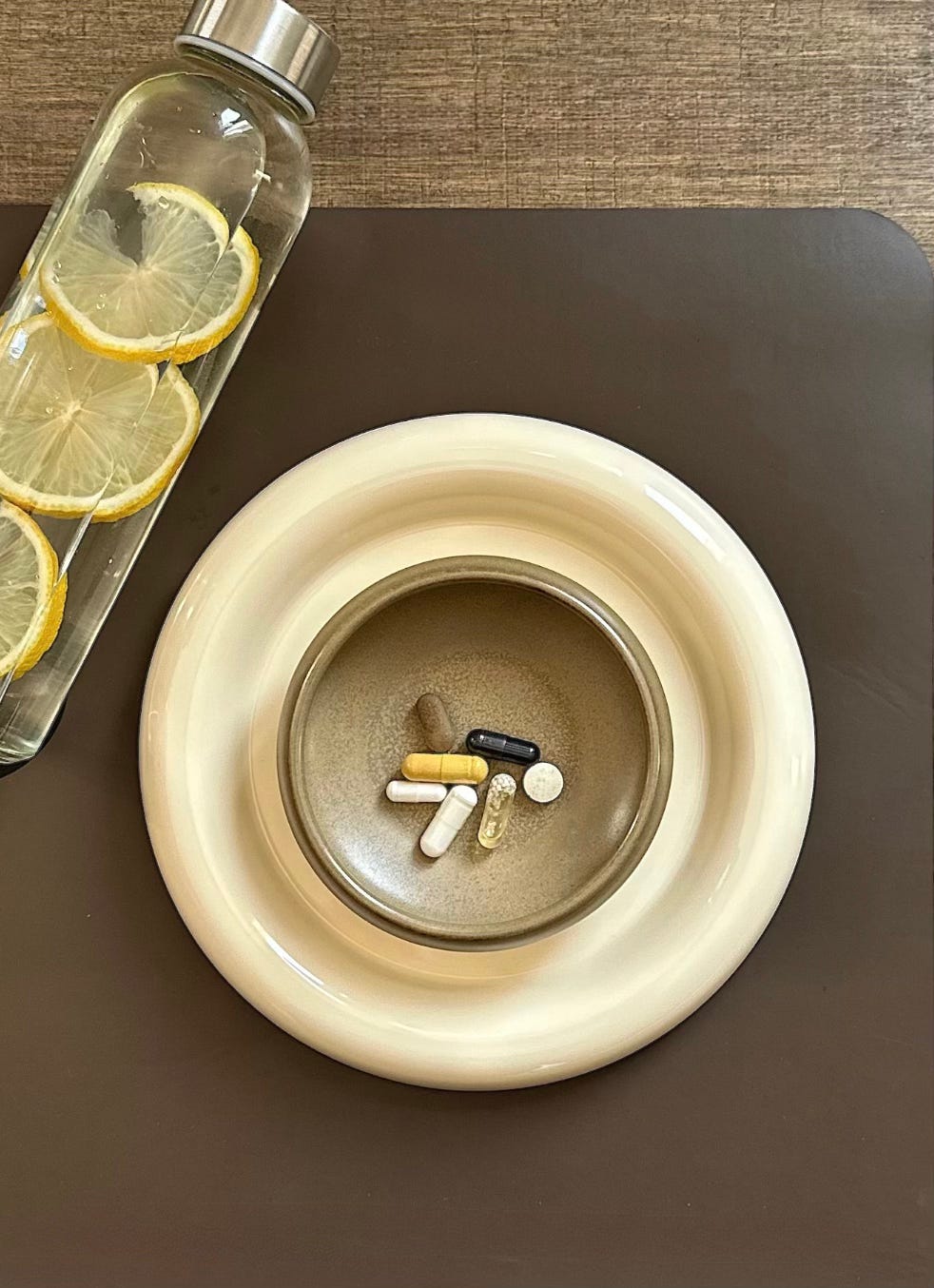
Ok, first thing I want to say, before you start buying a million supplements that your bestie or favourite influencer is telling you that you need, I would really recommend getting your blood work done to see what your body is actually deficient in.
Because firstly, we don’t need to be wasting money on things our body doesn’t need. And sometimes it can actually have the opposite effect and not be beneficial when you’re over-supplementing with the wrong things.
You can typically ask your functional doctor, family doctor, or naturopath to run a comprehensive micronutrient blood test.
If possible, I would do this every 6–12 months.
It really is so important to be in tune with your body. Your energy, sleep, mood, digestion, skin, hair… everything will thank you later. I like to think of it as something essential.
It’s not overly expensive, and depending on where you live, it might even be covered.
Common markers you’d want to include:
Vitamin D
Vitamin B12
Folate
Iron
Magnesium
Zinc
Calcium
Electrolytes
Thyroid markers
Blood glucose
Inflammation markers (CRP)
Now, onto what you should actually be taking.
Like I said, blood work and diet really do come first. You truly cannot out-supplement a poor diet.
What I would prioritise are these four things, as they’re typically common deficiencies, have a big impact on how you feel day to day, and are relatively easy to implement:
Iron (especially for women)
Omega-3
Magnesium
Vitamin D
Now when it comes to timing your supplements, which is what inspired this article, it’s something that’s often overlooked but can actually have a big impact on how well your supplements are absorbed and used in the body.
Timing really does matter.
When to Take Your Supplements - Your Simple Guide
Morning
Best taken with food (ideally with some fat)
Vitamin D
→ fat-soluble, needs dietary fat for absorption
→ supports mood, hormones, immunity
Omega-3
→ take with meals to improve absorption
→ supports skin, brain, inflammation
B vitamins / Multivitamin
→ can feel energising
→ best earlier in the day
Midday
Taken around meals
Digestive enzymes
→ just before or with meals
→ support digestion + nutrient absorption
Apple cider vinegar / bitters
→ before meals
→ support blood sugar balance
Protein powders
→ anytime (post-workout or with meals)
→ focus on total daily intake over timing
Evening
Best taken later in the day
Magnesium
→ supports sleep, relaxation, stress
→ take in the evening
Zinc
→ supports skin + immune function
→ take with food if sensitive
Ashwagandha
→ calming, supports cortisol
→ best in the evening
Anytime
(consistency is important)
Collagen
→ timing doesn’t matter
→ take daily (coffee, smoothies, recipes)
Electrolytes
→ morning, workouts, or when depleted
Creatine
→ timing isn’t critical
→ just take consistently (morning or post-workout works well)
Take Separately
Iron
→ best on an empty stomach or with vitamin C
→ avoid:
coffee
tea
calcium
Probiotics
→ best on an empty stomach
→ morning or before bed
Simple Rules
Fat-soluble → take with food
Energising → take in the morning
Calming → take in the evening
Gut support → away from heavy meals
Don’t take everything all at once
I was advised to take my probiotics with a meal that has fiber. Should I change that to an empty stomach?